
.png)
.png)
.png)
Deciding to stop drinking is a brave choice. But if you, your father, husband or brother have been drinking heavily every day for months or years, stopping suddenly can be dangerous. Within hours the body begins to react, and in some people this goes on to seizures or a life-threatening state called delirium tremens.
This guide explains exactly what alcohol withdrawal is, the symptoms to expect hour by hour, which warning signs mean "go to hospital now", and how to stop drinking safely.
Medical emergency signs: a seizure (fit), severe confusion, seeing or hearing things that are not there, high fever, or a racing heart after stopping alcohol. Go to the nearest hospital emergency immediately.
Why Does Alcohol Withdrawal Happen?
Alcohol is a depressant. It slows the brain by boosting GABA, the brain's "calm down" chemical, and blocking glutamate, its "excite" chemical. When someone drinks heavily every day, the brain fights back to stay balanced: it turns down GABA and turns up glutamate.
That works as long as alcohol keeps coming. Stop suddenly and the brakes come off, while the accelerator is still pressed down. The result is an over-excited nervous system, which produces tremors, anxiety, sweating and, in severe cases, seizures. This physical adaptation is what doctors call dependence.
Common Alcohol Withdrawal Symptoms
| Body system | Symptoms |
|---|---|
| Nervous system | Shaking hands (tremors), headache, restlessness, trouble sleeping, vivid dreams |
| Mood | Anxiety, irritability, low mood, strong cravings |
| Heart and circulation | Fast heartbeat, raised blood pressure, palpitations |
| Stomach | Nausea, vomiting, loss of appetite |
| Skin and temperature | Sweating, clammy skin, mild fever |
| Severe signs | Hallucinations, seizures, confusion, delirium tremens |
Alcohol Withdrawal Timeline: Hour by Hour
Every person is different, but withdrawal usually follows this pattern:
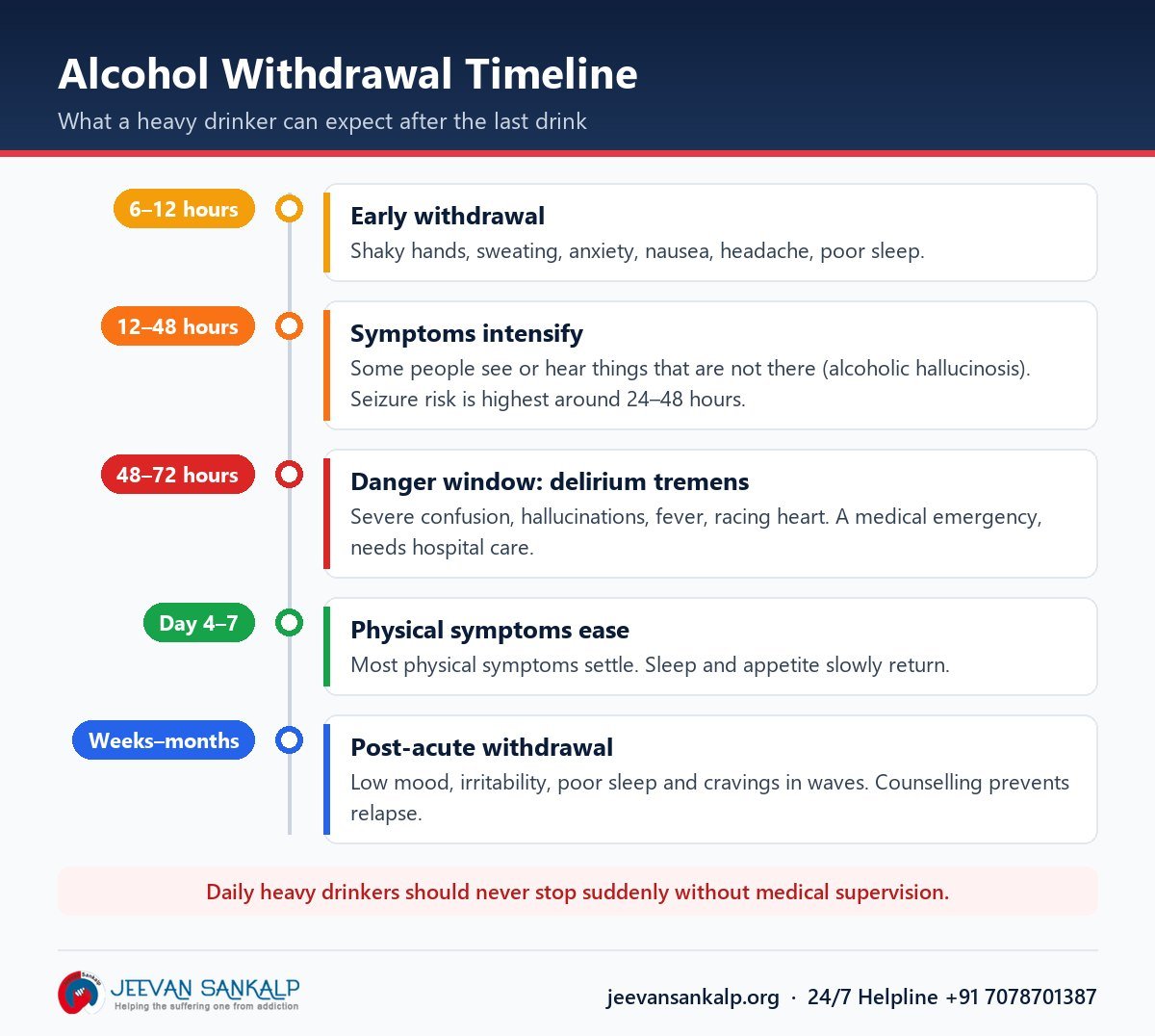
6 to 12 hours after the last drink
Mild symptoms begin: shaky hands, anxiety, sweating, nausea, headache and insomnia. Many heavy drinkers know this as the "morning shakes", and the urge to drink again to stop them is strong.
12 to 48 hours
Symptoms intensify. Some people experience alcoholic hallucinosis, seeing, hearing or feeling things that are not there, while still otherwise aware of where they are. Withdrawal seizures most often occur between 24 and 48 hours and can happen even in people who have never had a fit before.
48 to 72 hours
This is the window for delirium tremens (DTs), the most dangerous form of withdrawal. It affects a small percentage of people going through withdrawal, but it can be fatal without treatment. Signs include severe confusion, agitation, terrifying hallucinations, fever, heavy sweating and a racing heart.
Day 4 to day 7
For most people, physical symptoms ease within five to seven days. Sleep and appetite slowly return.
Weeks to months later
Some people experience post-acute withdrawal: poor sleep, low mood, irritability, poor concentration and cravings that come in waves. This is a major cause of relapse, which is why detox alone is rarely enough.
Who Is at Highest Risk?
Withdrawal is more likely to be severe if the person:
- drinks heavily every day, especially from the morning;
- has been drinking for many years;
- has had withdrawal seizures or DTs before;
- has liver disease, is elderly, or has other medical problems;
- also uses sleeping pills or other drugs.
Each untreated withdrawal can make the next one worse. Doctors call this "kindling".
Is It Safe to Stop Drinking Suddenly at Home?
For a moderate drinker who drinks a few times a week, stopping is usually safe. For a daily heavy drinker, stopping "cold turkey" at home without medical advice is risky. In India we often see families lock a loved one in a room to "make him quit". This can end in seizures or DTs with no one able to help.
The safer route is medically supervised detox. A doctor assesses severity, often using a scoring tool called CIWA-Ar, and gives medicines in reducing doses to keep the brain calm while it readjusts. Vitamin B1 (thiamine) is usually given to protect the brain from a serious condition called Wernicke's encephalopathy, which heavy drinkers are prone to. Learn more about our medical detoxification in Dehradun.
Never give withdrawal medicines or "nasha chhudane ki dawa" without a doctor. Some, especially when mixed with alcohol, can be dangerous. Read our honest review of anti-addiction drops.
How to Manage Mild Withdrawal Symptoms
If a doctor has confirmed that home withdrawal is safe for you, these steps help:
- Have someone stay with you for the first three to four days.
- Drink plenty of water, coconut water, ORS and soups.
- Eat small, frequent, easy meals such as khichdi, dal, fruit and curd.
- Rest in a calm, quiet, dimly lit room.
- Remove all alcohol from the house.
- Keep the doctor's number handy and know the emergency signs.
What Comes After Withdrawal?
Withdrawal treats the body, but not the reasons someone drinks. Without counselling, relapse prevention and family support, most people return to drinking within weeks. A complete programme combines detox with therapy, and sometimes with anti-craving medicines prescribed by a doctor. At Jeevan Sankalp, our alcohol rehabilitation programme in Dehradun manages withdrawal safely under medical supervision and then focuses on staying sober for good.
Frequently Asked Questions
How long do alcohol withdrawal symptoms last?
Physical symptoms usually start 6 to 12 hours after the last drink, peak between 24 and 72 hours, and settle within 5 to 7 days. Sleep problems, mood swings and cravings can continue for weeks or months.
What are the first signs of alcohol withdrawal?
Early signs include shaking hands, sweating, anxiety, nausea, headache, a fast heartbeat and difficulty sleeping, usually within 6 to 12 hours of the last drink.
Can alcohol withdrawal kill you?
Yes, in severe cases. Withdrawal seizures and delirium tremens can be fatal without treatment. This is why daily heavy drinkers should stop under medical supervision.
What is delirium tremens?
Delirium tremens (DTs) is the most severe form of alcohol withdrawal, usually appearing 48 to 72 hours after stopping. It causes severe confusion, hallucinations, fever, sweating and a racing heart, and needs emergency hospital care.
What happens to your body when you stop drinking alcohol?
In the first week the nervous system rebalances, which causes withdrawal symptoms. After that, sleep, liver function, blood pressure, skin and mood begin to improve, and many people notice more energy within a few weeks.
Does Jeevan Sankalp offer supervised alcohol detox?
Yes. Our Dehradun centre provides medically supervised alcohol detox with 24/7 care, followed by counselling and relapse prevention. Call +91 7078701387 for a confidential assessment.
This article is for awareness and education. It does not replace a consultation with a doctor. Please do not start, stop or change any medicine without medical advice.
Planning to Stop Drinking? Do It Safely.
Talk to our counsellor in complete confidence. We are available 24/7.
+91 7078701387 WhatsApp